Introduction
There’s nothing quite like waking up to the smell of French toast sizzling in a warm pan. This golden, custardy classic turns a few pantry staples into a breakfast that feels like a hug on a plate. Whether you’re cooking for a lazy Sunday morning or need a quick weekday treat, this recipe delivers rich flavor, a crispy-on-the-outside, soft-on-the-inside texture, and endless ways to customize it to your taste.
In this guide, you’ll get everything you need: a full ingredient breakdown, step-by-step instructions, nutrition facts, healthier swaps, serving ideas, common mistakes to dodge, and storage tips. By the end, you’ll be able to make French toast that rivals your favorite brunch spot — right in your own kitchen.
Ingredients List
Here’s what you’ll need to make about 4 servings (8 slices):
- 8 slices of bread – Thick-cut brioche, challah, or Texas toast work best because they soak up the custard without falling apart. Day-old bread is ideal since it’s slightly dried out and absorbs more flavor.
- 4 large eggs – The backbone of your custard, giving French toast its signature richness.
- 1 cup whole milk – Whole milk creates a creamier texture, though you can swap in oat milk or almond milk for a dairy-free version.
- 1/2 cup heavy cream (optional) – For an extra-luxurious, restaurant-style custard. Skip it for a lighter version.
- 2 tablespoons granulated sugar – Adds a subtle sweetness that caramelizes beautifully as it cooks.
- 1 teaspoon vanilla extract – Brings warmth and depth to every bite.
- 1 teaspoon ground cinnamon – A must for that cozy, aromatic flavor.
- 1/4 teaspoon ground nutmeg (optional) – Adds a subtle warmth that pairs beautifully with cinnamon.
- Pinch of salt – Balances the sweetness and enhances all the other flavors.
- 2 tablespoons butter (for cooking) – Creates that irresistible golden, crispy crust. Substitute with coconut oil for a dairy-free option.
- Maple syrup, powdered sugar, and fresh fruit – For topping and serving.
Substitution tip: If you’re out of whole milk, half-and-half or a plant-based milk works well too. For a gluten-free version, simply use your favorite gluten-free bread.

Timing
- Prep time: 10 minutes
- Cook time: 15 minutes
- Total time: 25 minutes
This recipe comes together in under 30 minutes, which is roughly 40% faster than many brunch-style recipes that require overnight soaking or baking. That makes it a realistic option even on a busy weekday morning, not just for weekend brunches.
Step-by-Step Instructions
Step 1: Whisk the Custard
In a wide, shallow bowl, whisk together the eggs, milk, heavy cream (if using), sugar, vanilla, cinnamon, nutmeg, and salt until fully combined and slightly frothy. This is the mixture that transforms plain bread into French toast, so take an extra 30 seconds to make sure there are no streaks of egg white left.
Tip: A shallow, wide bowl (like a pie dish) makes dipping bread much easier than a deep bowl.
Step 2: Dip the Bread
Place a slice of bread into the custard mixture, letting it sit for about 20–30 seconds per side. Thicker bread like brioche can handle a longer soak, while thinner sandwich bread needs just a quick dip to avoid getting soggy.
Tip: Don’t rush this step — under-soaked bread leads to dry centers, while over-soaking can make it fall apart in the pan.
Step 3: Heat the Pan
Warm a large nonstick skillet or griddle over medium heat and add about a tablespoon of butter, swirling it around until melted and slightly foamy.
Tip: If the butter browns too quickly, your pan is too hot — lower the heat slightly to avoid burning the outside before the inside cooks through.
Step 4: Cook the French Toast
Place the soaked bread slices onto the hot skillet, cooking for 2–3 minutes per side until golden brown and slightly crisp on the edges. Avoid pressing down on the bread, as this squeezes out the custard and dries out the slice.
Tip: Resist the urge to flip too early — wait until the edges look set and golden before turning.
Step 5: Keep Warm and Repeat
Transfer cooked slices to a baking sheet in a 200°F (93°C) oven to keep warm while you cook the remaining batches. Add more butter to the pan as needed between batches.
Tip: This step ensures every slice is served hot, even if you’re cooking for a crowd.
Step 6: Serve and Enjoy
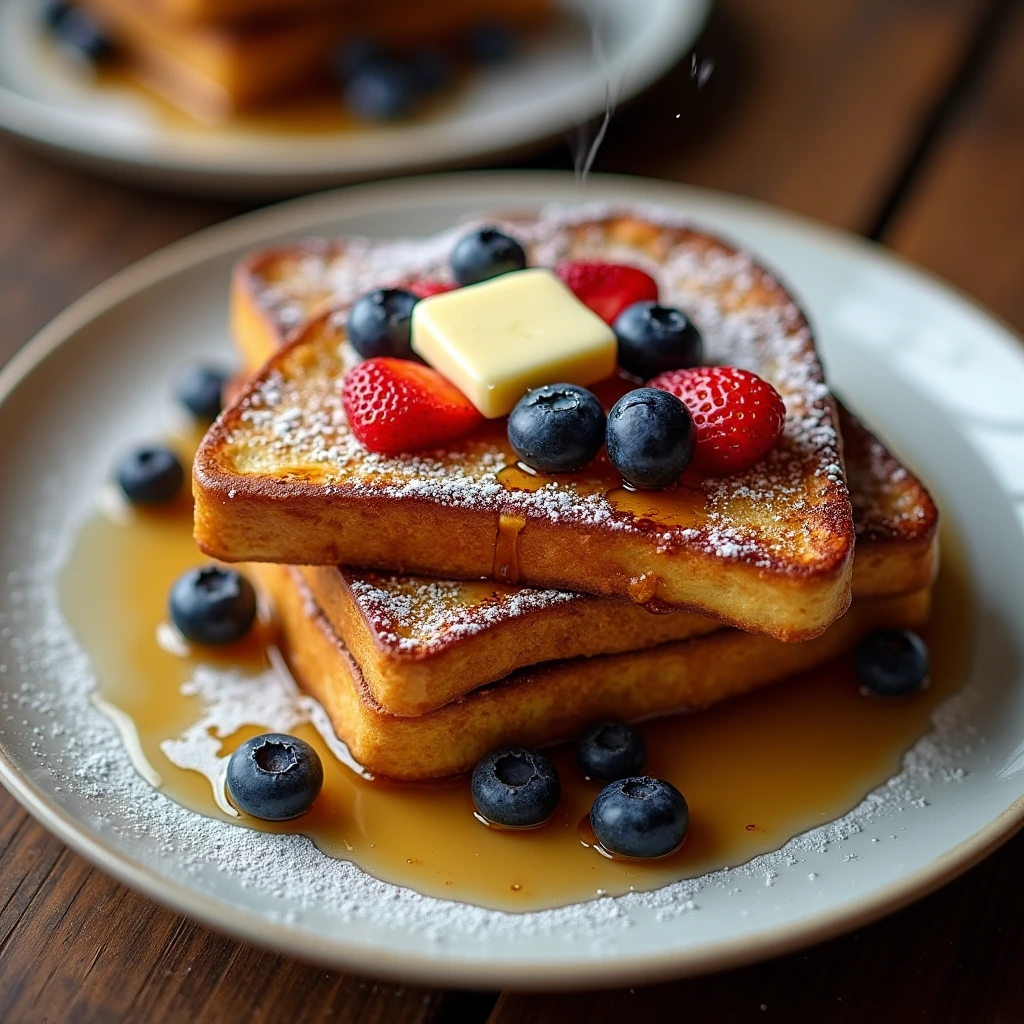
Plate your French toast while warm, and top with maple syrup, fresh berries, or a dusting of powdered sugar.
Nutritional Information
Approximate values per serving (2 slices), based on standard ingredients:
- Calories: 320
- Protein: 11g
- Carbohydrates: 34g
- Sugars: 10g
- Fat: 15g
- Saturated Fat: 7g
- Fiber: 1g
- Sodium: 340mg
These values can shift significantly depending on the bread and toppings you choose. Using a lighter bread and skipping the heavy cream can reduce calories by 15–20% without sacrificing much flavor.
Healthier Alternatives for the Recipe
- Swap whole milk for unsweetened almond or oat milk to cut back on saturated fat.
- Use whole grain or sprouted bread instead of brioche for added fiber and nutrients.
- Reduce added sugar by relying more on cinnamon and vanilla for flavor, then finishing with fresh fruit instead of syrup.
- Cook with a light spray of cooking oil instead of butter to reduce fat content.
- Add mashed banana to the custard for natural sweetness and extra fiber, cutting down on the need for added sugar.
- Try an egg-white version by using egg whites instead of whole eggs for a leaner, protein-forward option.
Serving Suggestions
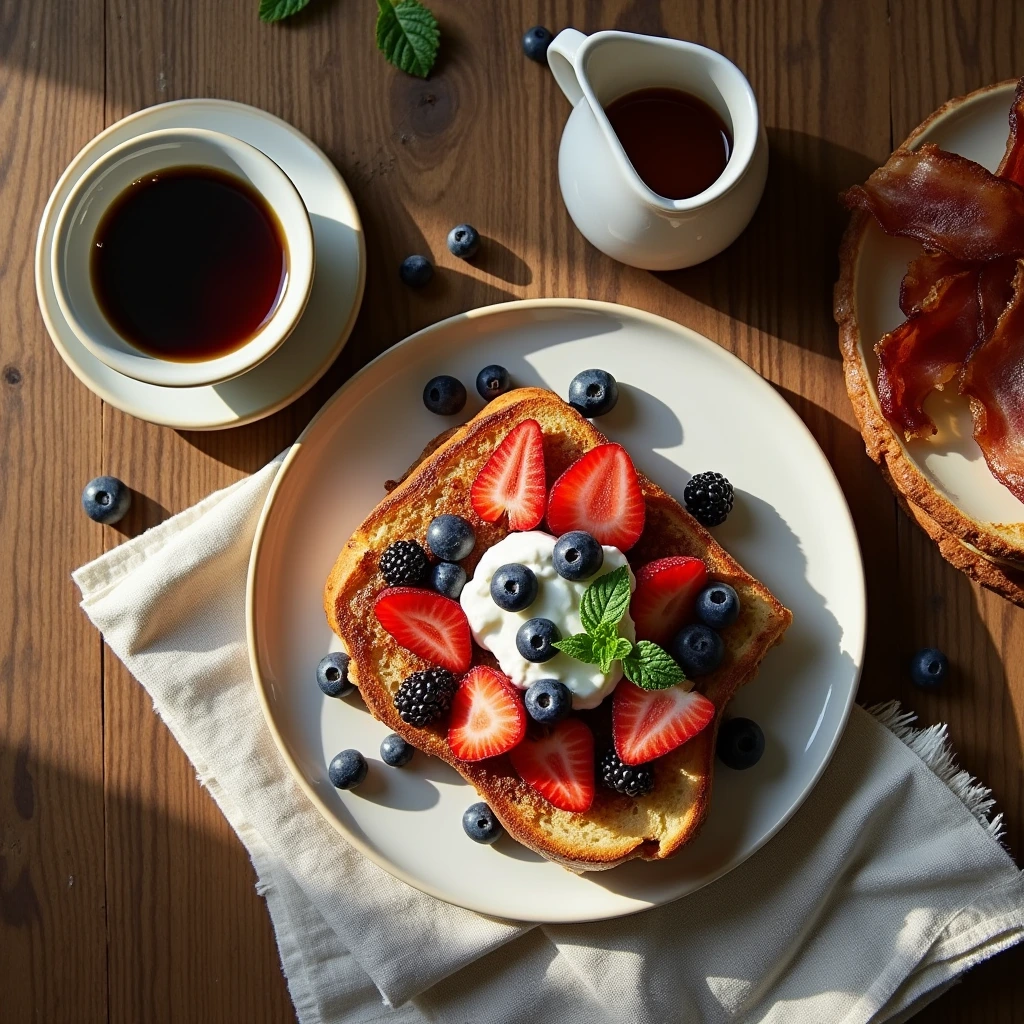
- Top with a mix of fresh berries and a light drizzle of maple syrup for a bright, balanced plate.
- Add a dollop of Greek yogurt for extra protein and a tangy contrast to the sweetness.
- Sprinkle with toasted nuts or granola for a satisfying crunch.
- Pair with crispy bacon or breakfast sausage for a sweet-and-savory combo.
- For a fun twist, turn your French toast into a sandwich by layering sliced bananas and a swipe of nut butter between two pieces.
- Serve alongside a hot cup of coffee or a fresh fruit smoothie to round out the meal.
Common Mistakes to Avoid
- Using bread that’s too fresh. Fresh, soft bread tends to fall apart in the custard. Slightly stale or day-old bread holds up far better.
- Skipping the soak time. Rushing the dipping process leads to dry, underwhelming centers.
- Cooking at too high a heat. This browns the outside too quickly while leaving the inside undercooked — medium heat is key.
- Overcrowding the pan. Too many slices at once lowers the pan’s temperature and leads to uneven cooking.
- Not preheating the pan properly. A pan that isn’t hot enough results in pale, soggy French toast instead of a crisp, golden crust.
- Forgetting to keep cooked slices warm. Letting the first batches cool while you finish cooking can make the final dish inconsistent in temperature.
Storing Tips for the Recipe
- Refrigerating leftovers: Store cooled French toast in an airtight container in the fridge for up to 3 days.
- Freezing for later: Lay slices flat on a baking sheet to freeze individually, then transfer to a freezer bag for up to 2 months. This prevents them from sticking together.
- Reheating: For the best texture, reheat in a toaster or oven at 350°F (175°C) for 5–8 minutes rather than using a microwave, which can make the bread soggy.
- Prepping ahead: You can whisk the custard mixture a day in advance and store it covered in the fridge, saving time on busy mornings.
Conclusion
French toast is a simple, comforting recipe that transforms basic pantry staples into a golden, custardy breakfast favorite. With the right bread, timing, and a few helpful tips, you can make a version that’s crispy, rich, and endlessly customizable. Try this recipe today, and don’t forget to share your results in the comments or leave a review below — and subscribe for more delicious recipes delivered straight to your inbox!
FAQs
Can I make French toast without eggs? Yes! You can create an egg-free custard using a mixture of milk, cornstarch, and a touch of mashed banana or flaxseed meal for binding.
What’s the best bread for French toast? Thick, slightly stale bread like brioche, challah, or Texas toast works best because it holds up well to soaking without becoming mushy.
Why is my French toast soggy in the middle? This usually happens when the bread is too fresh, the custard soak was too long, or the pan wasn’t hot enough to properly cook the center.
Can I make French toast ahead of time? Yes, you can cook it in advance, refrigerate or freeze it, and reheat in the oven or toaster for a quick, freshly-crisped result.
Is French toast healthy? It can be part of a balanced breakfast, especially with whole grain bread, reduced sugar, and fresh fruit toppings instead of syrup.