
Introduction
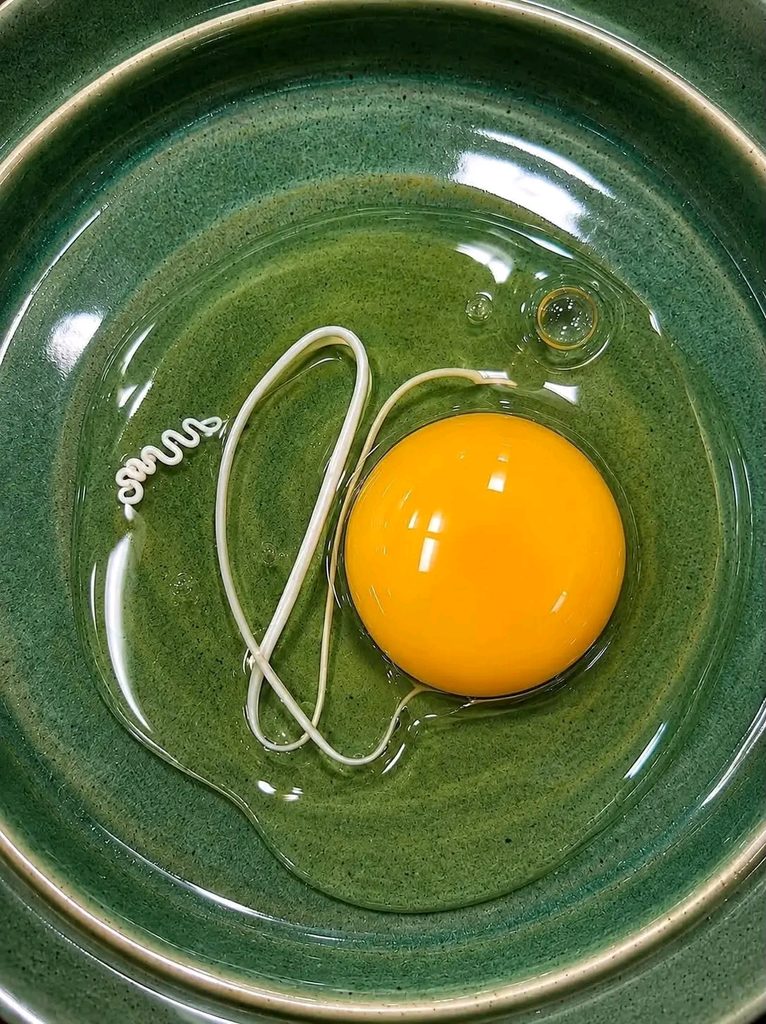
Have you ever cracked an egg onto a plate and discovered a strange white ribbon-like thing in an egg? It can look unusual enough to make you lose your appetite instantly! Fortunately, this mysterious structure is usually completely natural and is known as the chalaza.
The chalaza is a white, twisted, cord-like strand attached near the egg yolk. Many people mistake it for a worm, parasite, or spoiled part of the egg, but it actually plays an important role in keeping the yolk centered inside the egg.
So, before throwing away your breakfast, let’s take a closer look at this fascinating part of an egg—and then turn those perfectly good eggs into delicious fried eggs.
Ingredients List
To make simple and delicious fried eggs, you will need:
- 2 fresh eggs
- 1 teaspoon butter, olive oil, or cooking oil
- A small pinch of salt
- Freshly ground black pepper, optional
- Fresh herbs, optional
- Toast or vegetables for serving, optional
Possible Substitutions
- Replace butter with olive oil for a different flavor.
- Use avocado oil or another heat-stable cooking oil.
- Skip added salt if you are following a low-sodium diet.
- Serve with whole-grain toast instead of white bread for additional fiber.
Remember: the white ribbon-like thing in an egg, also called the chalaza, does not normally need to be removed before cooking.
Timing
Making fried eggs is quick and simple.
- Preparation time: 2 minutes
- Cooking time: 3–5 minutes
- Total time: Approximately 5–7 minutes
That means you can go from cracking the egg to enjoying breakfast in less than 10 minutes.
The exact cooking time depends on whether you prefer a runny yolk, medium yolk, or fully cooked yolk.
Step-by-Step Instructions
Step 1: Inspect the Egg
Crack your egg carefully into a clean bowl or plate.
If you notice a white, string-like, or ribbon-like structure near the yolk, don’t panic. It is likely the chalaza, a normal part of the egg.
Check the egg for an unusual smell or obvious discoloration. If the egg smells normal and has been properly stored, the chalaza itself is not generally a sign that the egg is spoiled.
Step 2: Heat Your Pan
Place a nonstick skillet over medium or medium-low heat.
Add butter or oil and allow it to warm gently. Avoid overheating the pan, as extremely high temperatures can cause the egg white to become tough or brown too quickly.
Step 3: Add the Egg
Gently slide the egg into the pan.
Allow the egg white to spread naturally. You may see the chalaza near the yolk, but it will cook along with the rest of the egg.
Step 4: Cook to Your Preferred Texture
Cook until the egg white is set.
For a runnier yolk, cook for a shorter period. For a firmer yolk, continue cooking longer or carefully flip the egg.
A useful tip is to keep the heat moderate. Gentle cooking helps create tender egg whites and a more pleasant texture.
Step 5: Season and Serve
Add a small amount of salt and pepper.
Serve immediately while the egg is warm, tender, and freshly cooked.
Nutritional Information
The nutritional value depends on the size of the egg and the amount of oil or butter used.
A typical large egg contains approximately:
- Calories: 70–80
- Protein: About 6 grams
- Fat: About 5 grams
- Carbohydrates: Less than 1 gram
- Choline: A naturally occurring nutrient found in eggs
- Vitamin B12: Present in meaningful amounts
- Vitamin D: Present in varying amounts
- Selenium: A naturally occurring mineral
Important Note About the Chalaza
The chalaza does not significantly change the nutritional value of the egg. It is simply a natural structure within the egg.
A visible chalaza can sometimes be more noticeable in fresh eggs because the internal structures are still firm and intact.
Healthier Alternatives for the Recipe
You can easily adapt fried eggs to suit different dietary preferences.
Use Less Added Fat
Try cooking your egg with a small amount of olive oil instead of a larger amount of butter.
Add Vegetables
Serve your egg with:
- Spinach
- Tomatoes
- Mushrooms
- Bell peppers
- Avocado
These additions can increase fiber and provide additional vitamins and minerals.
Choose Whole Grains
Pair fried eggs with whole-grain toast for a more filling breakfast.
Try a Lower-Oil Cooking Method
A good nonstick pan can reduce the amount of oil needed during cooking.
Serving Suggestions
Fried eggs are incredibly versatile.
Try serving them:
- On warm whole-grain toast
- Over sautéed vegetables
- With avocado slices
- Alongside tomatoes and fresh herbs
- With roasted potatoes
- On top of rice or grains
- As part of a hearty breakfast bowl
For a simple but attractive presentation, sprinkle the finished egg with fresh herbs and freshly ground black pepper.
And yes—the white ribbon-like thing in an egg can stay right where it is. Once cooked, most people will not even notice it.
Common Mistakes to Avoid
Mistake 1: Throwing Away an Egg Because of the Chalaza
A visible chalaza is commonly mistaken for something harmful. In reality, it is a normal structure that helps keep the yolk positioned inside the egg.
Mistake 2: Cooking Eggs Over Extremely High Heat
High heat can cause the bottom of the egg to brown before the white is properly cooked.
Use moderate heat for better texture.
Mistake 3: Judging Egg Freshness by the Chalaza Alone
The appearance of the chalaza is not the only factor to consider when evaluating an egg.
Always consider:
- Storage conditions
- Expiration or best-before information
- Unusual odors
- Unusual discoloration
Mistake 4: Overcooking
Cooking eggs for too long can make the whites rubbery and the yolk dry.
Remove the egg from the heat when it reaches your preferred level of doneness.
Storing Tips for the Recipe
Raw eggs should be stored according to local food-safety guidance and package instructions.
For cooked fried eggs:
- Eat them soon after cooking for the best texture.
- If storing leftovers, refrigerate them promptly in a suitable covered container.
- Reheat thoroughly before eating if you choose to reheat them.
For the freshest flavor and texture, fried eggs are generally best enjoyed immediately after cooking.
So, What Is the White Ribbon-Like Thing in an Egg?
The answer is: the chalaza.
The chalaza consists of twisted, rope-like strands of egg white that help hold the yolk in position inside the egg. It may look strange when you first see it, especially if you’ve never noticed one before.
It is not normally a worm, parasite, or mysterious foreign object.
The next time you crack an egg and see that unusual white strand, you can take a closer look without automatically assuming something is wrong.
Conclusion
The white ribbon-like thing in an egg is usually the chalaza, a natural structure that helps keep the yolk centered. It can be safely cooked with the egg. Don’t panic—inspect freshness, cook properly, enjoy your breakfast, and share your experience below!
Have you ever spotted a chalaza and wondered what it was? Try this simple breakfast, leave a comment with your experience, share your thoughts in the review section, and subscribe for more food facts and recipe updates.
FAQs – Frequently Asked Questions
What is the white ribbon-like thing attached to an egg yolk?
It is usually the chalaza, a natural, twisted strand of egg white that helps hold the yolk in position.
Is the chalaza a worm or parasite?
No. The chalaza is a normal part of an egg and is not a worm or parasite.
Can I eat the chalaza?
The chalaza is generally cooked along with the egg and does not need to be removed.
Does a visible chalaza mean the egg is bad?
Not by itself. Egg quality and safety should be assessed using appropriate food-safety guidance, storage history, smell, appearance, and date information.
Why is the chalaza more visible in some eggs?
The visibility can vary between eggs. Internal egg structures may be easier to see depending on the egg’s freshness and natural variation.
Should I remove the chalaza before making fried eggs?
You usually do not need to remove it. It will cook with the rest of the egg.
Can I still use the egg if I see two white strands?
Yes. Eggs may have more than one visible chalaza-like strand around the yolk.
What should I do if an egg smells bad?
Do not rely on the chalaza to determine safety. If an egg has a clearly unusual or unpleasant odor or other signs of spoilage, discard it and follow appropriate food-safety guidance.