INTRODUCTION
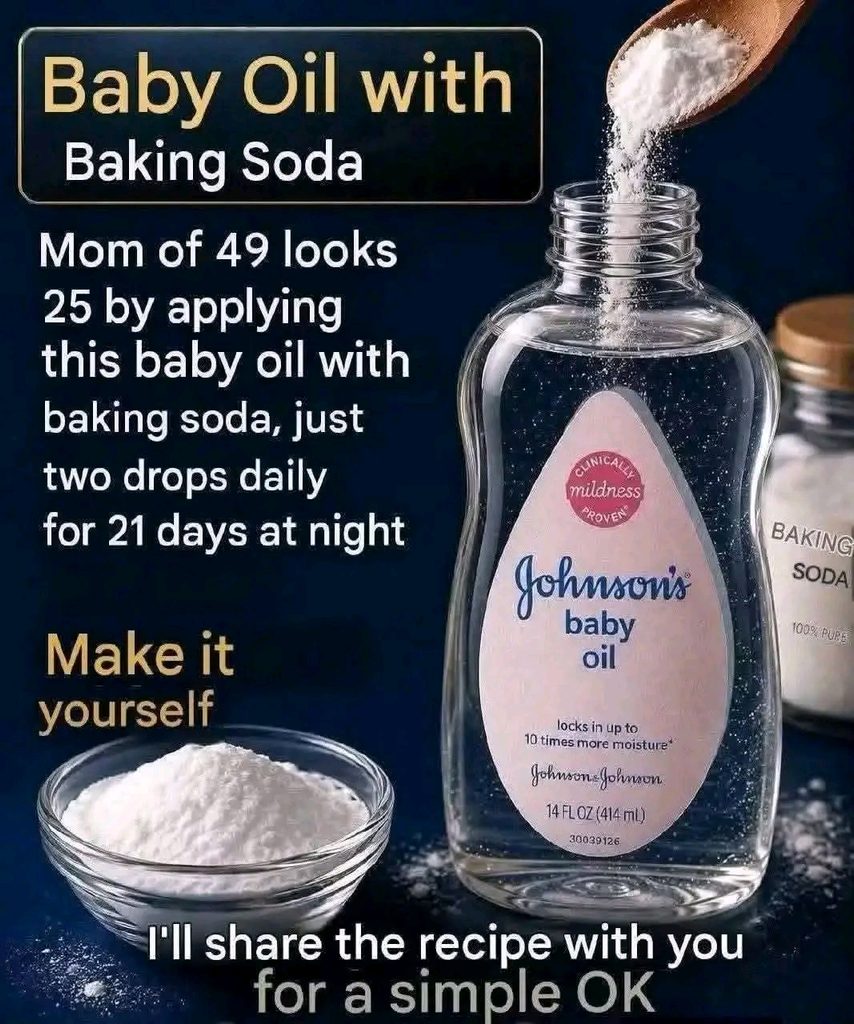
DIY skin-care recipes often become popular because they use simple ingredients that many people already have at home. One combination that frequently appears online is baby oil mixed with baking soda.
Baby oil is generally a mineral-oil-based product designed to help reduce moisture loss from the skin. Baking soda, also known as sodium bicarbonate, is an alkaline household ingredient that is sometimes used in homemade exfoliating mixtures.
Although the combination may leave the skin feeling temporarily smooth, it is important to understand that “natural” or homemade does not automatically mean safe for everyone. Baking soda can be irritating, especially when used repeatedly or rubbed aggressively on the skin.
This article explains how people commonly prepare this type of mixture, what each ingredient does, and the precautions you should consider before applying it.
INGREDIENTS
For a simple DIY mixture, you may use:
- 1 teaspoon of baby oil
- ½ teaspoon of baking soda
- A small, clean bowl
- A clean spoon or spatula
Choose a baby oil intended for cosmetic use and avoid products containing fragrances or other ingredients to which you know your skin reacts.
PREPARATION
Start by placing the baking soda into a clean, dry bowl.
Add the baby oil gradually and mix until you obtain a smooth, slightly thick paste.
Before applying the mixture to a larger area, perform a patch test. Apply a small amount to an inconspicuous area of skin and wait to see whether irritation develops.
If there is no irritation, some people may choose to apply a very small amount to areas of normal, healthy skin.
Do not scrub aggressively. Baking soda can have an abrasive effect, and vigorous rubbing can damage the skin barrier.
After a short application, rinse thoroughly with lukewarm water and gently pat the skin dry.
Because baking soda can be drying or irritating, this should not be treated as a daily exfoliating routine.
WHAT DOES BABY OIL DO?
Baby oil is commonly formulated with mineral oil, which works mainly by forming a protective layer over the skin. This can help reduce water loss and leave the skin feeling softer.
However, baby oil does not provide the same benefits as a medically proven treatment for acne, pigmentation, wrinkles, or other dermatological conditions.
If your goal is simply to moisturize dry skin, a fragrance-free moisturizer may be a more appropriate everyday option.
WHAT DOES BAKING SODA DO?
Baking soda is alkaline, while healthy skin has a naturally acidic surface environment known as the skin barrier or acid mantle.
Applying alkaline substances to the skin may disturb this balance, particularly with frequent use. Some people may experience dryness, burning, redness, itching, or irritation.
For this reason, baking soda should not automatically be considered a gentle facial exfoliant.
CONTRAINDICATIONS
Avoid this mixture if you have:
- Very sensitive or easily irritated skin
- Eczema or active dermatitis
- Open cuts or wounds
- Sunburn
- A rash or unexplained skin irritation
- Recently shaved or damaged skin
- A known sensitivity to any ingredient in the baby oil
It is also best to avoid applying baking soda mixtures close to the eyes, lips, or other sensitive areas.
Do not use the mixture as a substitute for treatment prescribed by a dermatologist.
MEDICAL CONSULTATION & SIDE EFFECTS
Possible reactions may include redness, dryness, itching, burning, stinging, or irritation.
If you experience significant discomfort, wash the area with plenty of water and discontinue use.
Seek professional medical advice if irritation is severe, persistent, spreading, or associated with swelling, blistering, or difficulty breathing.
People with chronic skin conditions should speak with a dermatologist before experimenting with homemade exfoliating treatments.
A dermatologist can also recommend evidence-based ingredients if you are trying to address acne, dark spots, uneven texture, dryness, or signs of aging.
SUMMARY
The combination of baby oil and baking soda is a popular DIY skin-care idea, but it should be approached with caution.
Baby oil can help reduce moisture loss and make the skin feel softer, while baking soda may provide a mildly abrasive effect. However, baking soda can also irritate the skin and potentially interfere with the skin’s natural protective barrier.
If you decide to try the mixture, use a very small amount, avoid aggressive rubbing, perform a patch test first, and stop immediately if irritation occurs.
For regular skin care, gentle cleansers, moisturizers, sunscreen, and dermatologist-recommended products are generally more reliable choices than homemade mixtures.
FAQ – FREQUENTLY ASKED QUESTIONS
Can I use baby oil and baking soda on my face?
It is generally better to be cautious with baking soda on the face because facial skin can be sensitive. A gentle, fragrance-free facial product is usually a safer choice for routine skin care.
Does baking soda remove wrinkles?
There is no good evidence that baking soda can remove wrinkles. It may temporarily make the skin feel smoother, but that is not the same as treating wrinkles.
Can baby oil remove dark spots?
Baby oil is primarily an occlusive moisturizer and is not a proven treatment for hyperpigmentation or dark spots.
How often can I use this mixture?
There is no established medically recommended frequency for this homemade mixture. Because baking soda can irritate the skin, frequent use is not advisable.
Should I patch-test the mixture?
Yes. A small patch test can help you identify irritation before applying a product to a larger area.
What should I do if my skin burns after using it?
Rinse the area thoroughly with lukewarm water and stop using the mixture. If burning or irritation is severe or does not improve, consult a healthcare professional.
Is baby oil good for dry skin?
Baby oil can help reduce moisture loss and leave skin feeling softer. Applying it to slightly damp skin can help seal in existing moisture, although a dedicated moisturizer may provide additional skin-supporting ingredients.