
INTRODUCTION
Skin tags are small, soft growths that commonly appear on areas where skin rubs against skin or clothing, such as the neck, underarms, eyelids, groin, and beneath the breasts. They are usually harmless and are medically known as acrochordons.
Because skin tags can sometimes be annoying or cosmetically undesirable, many people search for natural methods to remove them at home. One popular suggestion involves applying petroleum jelly, sometimes overnight, with the expectation that the skin tag will dry out and disappear by morning.
However, there is an important distinction between keeping the surrounding skin protected and actually removing a skin tag. Petroleum jelly is a moisturizing and protective ointment; it is not a proven skin-tag removal treatment. Applying it overnight may help reduce friction and dryness, but it should not be expected to make a skin tag disappear overnight.
Before attempting any home treatment, it is also important to make sure the growth really is a skin tag. Other skin conditions can sometimes look similar.
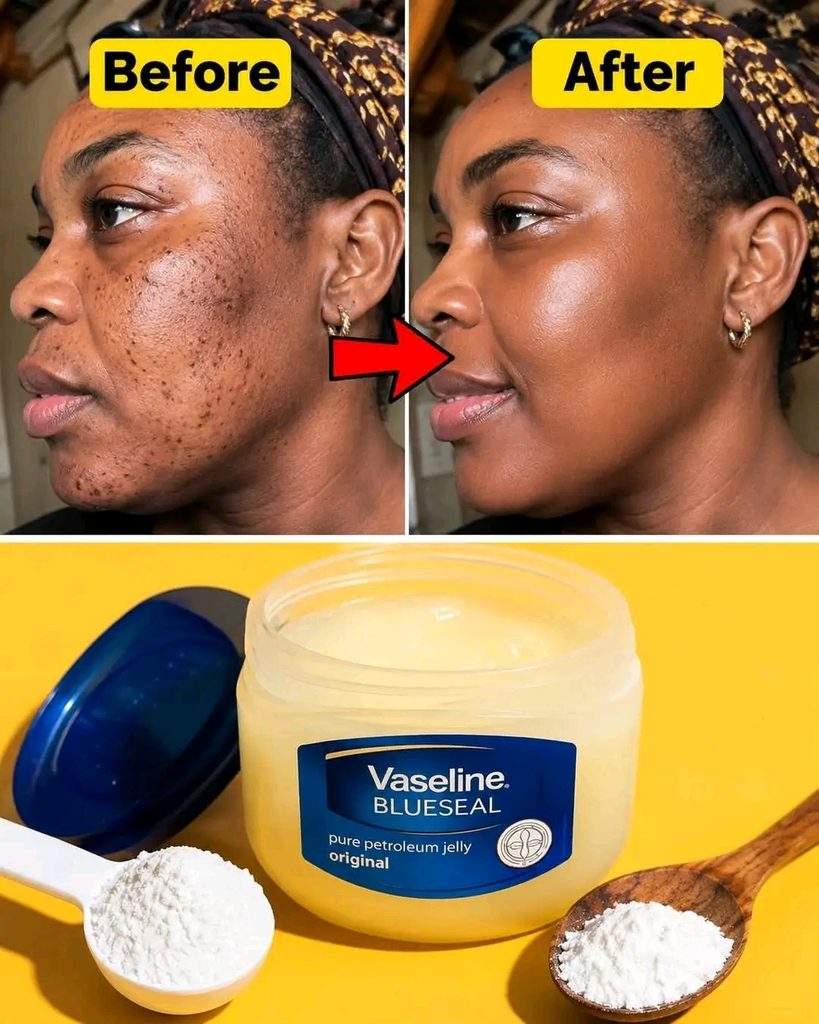
INGREDIENTS
For a simple skin-protection routine, you only need:
- A small amount of plain petroleum jelly
- Mild soap and lukewarm water
- A clean, soft towel
- A clean cotton swab or clean fingertip
Avoid combining petroleum jelly with irritating substances such as vinegar, bleach, concentrated essential oils, acids, or other chemicals. These products can cause burns, irritation, or infection.
PREPARATION
Start by gently washing the area with mild soap and lukewarm water. Pat the skin dry instead of rubbing it.
Apply a very thin layer of plain petroleum jelly around the skin tag and the surrounding skin. The purpose is to reduce dryness and friction, particularly if clothing repeatedly rubs against the area.
If you choose to leave the petroleum jelly on overnight, use clean bedding and avoid covering the area with anything that could tightly constrict the skin.
In the morning, gently wash the area and pat it dry.
Remember that this routine is not a proven method for removing a skin tag. A skin tag may remain unchanged after one night or after repeated applications.
Do not cut, tie off, burn, freeze, or pull off a skin tag yourself. Home removal can cause bleeding, infection, scarring, and accidental injury to surrounding skin.
CONTRAINDICATIONS
Do not experiment with home removal methods if the growth is:
- Bleeding without an obvious reason
- Painful or very tender
- Rapidly changing in size, shape, or color
- Dark, irregular, or unusually pigmented
- Crusted or repeatedly ulcerated
- Located on or very close to the eye
- Uncertain in appearance
You should also avoid applying products to broken, infected, or severely irritated skin.
Petroleum jelly itself is generally well tolerated by many people, but stop using it if you develop significant redness, itching, burning, swelling, or another unusual reaction.
MEDICAL CONSULTATION & SIDE EFFECTS
A healthcare professional can determine whether a growth is actually a skin tag. If removal is desired, a clinician can usually remove a confirmed skin tag using an appropriate procedure, such as cutting it off with sterile equipment, freezing it, or using another suitable technique.
Professional removal is particularly important when the diagnosis is uncertain. Not every small skin growth is a skin tag, and attempting to remove an unidentified lesion at home could delay appropriate diagnosis.
Possible problems from inappropriate home removal include bleeding, infection, pain, irritation, and permanent scarring.
If a growth starts bleeding, becomes painful, changes significantly, or does not look like a typical skin tag, seek medical advice rather than continuing a home remedy.
SUMMARY
Petroleum jelly can be useful for protecting and moisturizing skin, especially when friction causes dryness or irritation. However, there is no good evidence that petroleum jelly can safely remove a skin tag overnight.
If your goal is simply to soothe skin around a skin tag, a small amount of plain petroleum jelly may be reasonable for many people. If your goal is to permanently remove the growth, the safest approach is to have it assessed by a qualified healthcare professional.
Never assume that every small skin growth is harmless, especially when it changes, bleeds, hurts, or has an unusual appearance.
FAQ – FREQUENTLY ASKED QUESTIONS
CAN PETROLEUM JELLY REMOVE A SKIN TAG OVERNIGHT?
No. Petroleum jelly is primarily a skin protectant and moisturizer. It should not be considered a proven overnight skin-tag removal treatment.
CAN I PUT VASELINE ON A SKIN TAG?
Plain petroleum jelly can generally be used as a protective moisturizer on intact skin. However, it is not expected to make the skin tag disappear.
HOW LONG DOES IT TAKE FOR A SKIN TAG TO DISAPPEAR NATURALLY?
Many skin tags remain for a long time and do not disappear on their own. Their natural course varies from person to person.
IS IT SAFE TO CUT OFF A SKIN TAG AT HOME?
It is not recommended. Cutting a skin tag yourself can cause bleeding, infection, and scarring, and you may accidentally remove a growth that needs medical evaluation.
WHEN SHOULD I SEE A DOCTOR?
Consult a healthcare professional if the growth changes rapidly, becomes painful, bleeds, looks unusual, or if you are not certain that it is a skin tag.
WHAT IS THE SAFEST WAY TO REMOVE A SKIN TAG?
For a confirmed skin tag that you want removed, professional assessment and removal are generally safer than attempting to cut, burn, freeze, or chemically treat it yourself.