INTRODUCTION
Garlic is one of the most useful ingredients in the kitchen. Its strong flavor can transform soups, sauces, roasted vegetables, marinades, meat dishes, and countless homemade recipes. However, many people unknowingly store garlic in ways that can make it spoil faster.
Knowing how to store garlic properly can help preserve its flavor, texture, and quality while reducing unnecessary food waste. The ideal storage method depends on whether your garlic is whole, peeled, chopped, or already cooked.
One of the most important rules is simple: whole, unpeeled garlic generally prefers a cool, dry, dark, and well-ventilated place rather than a sealed container.
INGREDIENTS
For proper garlic storage, you do not need complicated ingredients. You mainly need the right storage conditions.
- Whole garlic bulbs
- A cool, dry location
- A breathable container, mesh bag, or garlic basket
- Good air circulation
- A clean, dry kitchen area
If you are storing peeled or chopped garlic, you will also need:
- An airtight food-safe container
- A refrigerator
- Clean utensils
Avoid storing fresh garlic in conditions that are warm, humid, or poorly ventilated.
PREPARATION
1. STORE WHOLE GARLIC IN A DRY PLACE
Whole garlic bulbs should generally be kept somewhere cool, dry, dark, and well ventilated.
A pantry or cupboard can work well if it is away from heat, steam, and direct sunlight. Excess moisture can encourage mold and spoilage.
2. DO NOT TRAP WHOLE GARLIC IN A SEALED PLASTIC BAG
One common storage mistake is placing whole garlic bulbs inside a tightly sealed plastic bag.
Without adequate ventilation, moisture can accumulate around the bulbs. This may encourage deterioration and mold growth.
Instead, use a mesh bag, wire basket, paper bag with ventilation, or another breathable container.
3. KEEP GARLIC AWAY FROM HUMID AREAS
The area next to a sink, dishwasher, or cooking surface may be too humid or warm for long-term garlic storage.
Choose a dry cupboard or pantry instead.
4. KEEP THE BULB INTACT UNTIL NEEDED
Garlic generally lasts longer when the bulb and individual cloves remain protected by their natural papery layers.
For this reason, avoid peeling all your garlic in advance unless you have a specific reason to do so.
5. REFRIGERATE PEELED GARLIC
Once garlic has been peeled, its storage needs change. Peeled cloves should be placed in a clean, covered container and refrigerated.
Use refrigerated peeled garlic promptly and inspect it before use.
6. BE CAREFUL WITH GARLIC STORED IN OIL
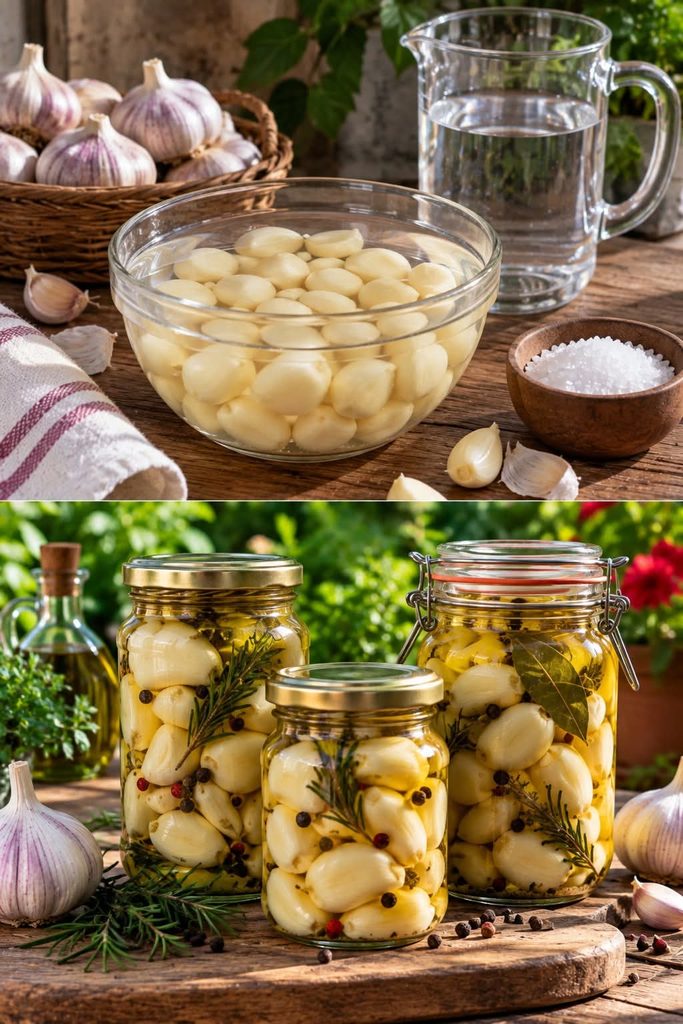
Garlic preserved in oil requires special attention. Do not simply leave homemade garlic-in-oil mixtures at room temperature.
Fresh garlic combined with oil can create conditions favorable to the growth of Clostridium botulinum, the bacterium associated with botulism. For homemade preparations, follow reliable food-safety guidance and avoid storing them improperly.
CONTRAINDICATIONS
Garlic is a common food and is safe for most people when consumed as part of a normal diet. However, concentrated garlic products and large amounts may not be appropriate for everyone.
People taking medications that affect blood clotting should be particularly careful with concentrated garlic supplements because garlic may have an antiplatelet effect.
Some people may also experience digestive discomfort, heartburn, nausea, or an unpleasant odor after consuming significant amounts of garlic.
People with known allergies to garlic or other members of the Allium family should avoid it according to their healthcare professional’s advice.
Storage safety is equally important. Never eat garlic that shows significant mold, unusual discoloration, a rotten smell, or obvious spoilage.
MEDICAL CONSULTATION & SIDE EFFECTS
Garlic is primarily a food rather than a treatment. Although garlic has been studied for various potential health effects, it should not be considered a substitute for prescribed medication or professional medical care.
If you experience an allergic reaction after eating garlic, such as swelling, difficulty breathing, widespread hives, or severe symptoms, seek urgent medical attention.
If you regularly use garlic supplements, especially in high doses, discuss them with a healthcare professional if you take prescription medication or have a medical condition.
For food safety, remember that proper storage is essential. When in doubt about whether garlic has spoiled, it is safer to discard it rather than consume questionable food.
SUMMARY
The best way to store whole garlic is usually simple: keep it dry, cool, dark, and well ventilated.
Avoid sealing whole bulbs in airtight plastic bags or storing them in warm, humid areas. Keep the papery skin intact until you are ready to use the cloves.
Once garlic has been peeled, refrigerate it in a clean, covered container and use it promptly. Homemade garlic preserved in oil requires additional food-safety precautions and should never be treated like ordinary pantry-stored garlic.
These simple habits can help you maintain garlic quality, reduce food waste, and enjoy better flavor in your cooking.
FAQ – FREQUENTLY ASKED QUESTIONS
SHOULD WHOLE GARLIC BE STORED IN THE REFRIGERATOR?
Usually, whole garlic does not need refrigeration. A cool, dry, dark, and well-ventilated pantry is generally more suitable.
CAN GARLIC BE STORED IN A PLASTIC BAG?
A tightly sealed plastic bag is not ideal for whole garlic because it can trap moisture. A breathable container is preferable.
HOW SHOULD PEELED GARLIC BE STORED?
Place peeled garlic in a clean, covered container and refrigerate it. Use it promptly and discard it if it develops signs of spoilage.
CAN GARLIC BE STORED IN OIL?
Homemade garlic-in-oil mixtures require special care because of the risk of botulism. Do not store them casually at room temperature.
HOW CAN I TELL IF GARLIC HAS GONE BAD?
Look for extensive mold, soft or rotten cloves, unusual discoloration, unpleasant odors, or other obvious signs of spoilage. When garlic appears unsafe, discard it.
DOES GARLIC LAST LONGER IF IT IS NOT PEELED?
Generally, yes. Keeping the cloves protected by their natural papery skin helps preserve them for longer than peeling them unnecessarily in advance.